The online Doctor of Naturopathic Medicine (ND) program at the National University of Medical Sciences (USA) is a comprehensive professional doctoral program focused on natural therapeutics including peptide therapy & biologicals, preventive medicine, and holistic patient care. The program combines modern biomedical sciences with traditional healing approaches, preparing graduates to support health using evidence-informed natural interventions including nutrition, botanical medicine, lifestyle modification, and physical therapies.
This program is delivered primarily online, with optional hands-on training opportunities. Students without prior health education typically complete the program over four years. Those with prior healthcare training may complete the program in two years, while applicants holding doctoral-level qualifications may qualify for an accelerated one-year track.
The university is in the process of developing a teaching clinic in California where students may participate in supervised clinical training. Naturopathic services will be provided to the public at no cost. A teaching farm is also planned, where students may gain practical exposure to botanical medicine, including cultivation and preparation of medicinal plants at Pourgol Botanical Gardens. Participation is currently optional but may become a formal requirement in the future.
Admissions Requirements
Applicants must hold a bachelor’s degree in any discipline to enroll in the ND program. Those without a bachelor’s degree may enroll in the Bachelor of Science in Osteopathic Manual Practice (BSc OMP) as a combined pathway. Upon completion, graduates receive both the bachelor’s degree and the Doctor of Naturopathic Medicine degree, allowing them to enter practice with a broader clinical skill set. This combined pathway offers a time-efficient and cost-effective route to dual qualifications, preparing graduates for careers in natural healthcare and manual therapy.
Program Recognition
Graduates of the Doctor of Naturopathic Medicine (ND) program at National University of Medical Sciences (USA) are permitted to deliver natural health services in a wide range of settings across the United States, Canada, and many other countries. In certain regions, such as Quebec in Canada, naturopathic services may be eligible for health insurance reimbursement once alumni join certain associations such as ACMA. The use of professional titles and scope of practice varies depending on local regulations. For example, in California graduates may work as naturopaths but cannot use the title “registered naturopath,” while in Ontario they may use the title “naturotherapist.” By using appropriate terminology, graduates can practice in many jurisdictions within applicable guidelines. In the United States, some states do not require licensure to practice as a naturopath, while others have specific regulatory frameworks. In regulated states such as California, graduates may practice using permitted titles such as “naturopath” rather than “naturopathic physician.” In other situations, practitioners may choose to affiliate with professional organizations to structure their practice. Some associations offer different practice frameworks. For example, the GEHA Association provides a pathway with a more limited scope of practice, while the Indigenous Health Authority offers a broader scope within its framework, including the use of the title “Dr” for qualified practitioners. Graduates of the ND program may apply to join the Indigenous Health Authority (indigenous heritage is not required) as tribal health practitioners, subject to its requirements and guidelines.
Scholarship Opportunities
For a limited time, students enrolling in the combined Doctor of Naturopathic Medicine, Doctor of Integrated Indigenous Medicine and PhD in Osteopathic Clinical Sciences triple-degree program may qualify for significant scholarships of up to $41,000. This allows students to complete three doctoral degrees(ND/DIIM/PhD) while paying tuition equivalent to a single program, saving significant time and tuition.
Doctor of Naturopathic Medicine (ND) Curriculum
There are 3 different curriculums for the ND program:
Curriculum for the 4-Year, 8-Semester ND Program:
SEMESTER 1
Human Physiology – Study of the normal functioning of the human body, including cellular processes, organ systems, and homeostasis. Provides a foundation for understanding health, disease, and natural therapeutic interventions.
Human Anatomy – Comprehensive study of the structure of the human body, including musculoskeletal, neurological, and visceral systems, with clinical relevance for naturopaths.
Foundations of Naturopathic Medicine – Introduction to the core concepts, history, and scope of naturopathic medicine, emphasizing holistic and patient-centered care.
Naturopathic Philosophy & Principles – Exploration of the fundamental principles of naturopathic medicine, including the healing power of nature, prevention, and treating the root cause of disease.
Clinical Skills and Patient Communication – Development of essential clinical skills, including patient interviewing, case-taking, documentation, and effective communication strategies.
SEMESTER 2
Clinical Biomechanics – Study of human movement and mechanical function, focusing on posture, gait, injury prevention, and rehabilitation.
Naturopathic Medicine – Introduction to basic naturopathic treatment approaches, including lifestyle modification and foundational natural therapies such as homeopathy, acupuncture, lifestyle medicine, manual therapy, clinical nutrition, herbal therapy, mind-body medicine, detoxification, metabolic support, traditional Chinese medicine, peptide therapy, IV nutrient therapy, bioidentical hormones, regenerative support therapy, nutritional supplementation, rehabilitation, hydrotherapy, and counseling & behavioral therapy. While we cover comprehensive therapies, students should know that they can only perform the services which are permitted in their jurisdiction. Not all therapeutic modalities are permitted in all locations.
Fundamentals of Botanical Medicine – Overview of herbal medicine, including plant properties, preparation methods, safety, and basic therapeutic applications.
Physical Medicine – Introduction to physical and manual therapies, including basic techniques for musculoskeletal health and pain management.
Naturopathic Medicine – Expansion of naturopathic treatment strategies with emphasis on integrating multiple natural modalities.
SEMESTER 3
Medical Microbiology – Study of microorganisms commonly encountered by naturopaths and their role in health and disease, including infection, immunity, and prevention.
Botanical Medicine – Introduction to commonly used medicinal herbs by naturopathic physicians, their actions, indications, and basic clinical applications.
Clinical Nutrition – Study of nutritional science and its application in maintaining health and preventing disease.
Physiology & Pathology of the Mind – Examination of mental health from both Western and Eastern perspectives, including stress, emotional health, and mind-body interactions.
Naturopathic Medicine – Intermediate clinical application of naturopathic therapies in common health conditions.
SEMESTER 4
Diagnosis and Symptomology – Study of clinical signs and symptoms, patient assessment, and the foundations of naturopathic diagnosis.
Orthopedic Assessment – Clinical evaluation of musculoskeletal conditions using orthopedic testing and functional assessment techniques.
Neurology – Introduction to the structure and function of the nervous system with clinical relevance.
Physical Medicine – Intermediate training in physical and manual therapies, including therapeutic modalities for pain and dysfunction.
Naturopathic Medicine – Advanced integration of naturopathic treatments into patient care.
SEMESTER 5
Pathology – Study of disease processes, including inflammation, degeneration, and cellular dysfunction.
Immunology – Examination of the immune system and its role in health, disease, and natural immune support strategies.
Neuro-diagnosis – Advanced neurological assessment techniques for identifying functional and structural disorders.
Business Management – Introduction to clinical practice management, including ethics, jurisprudence, operations, and professional development.
Botanical Medicine – Expanded study of herbal medicine with focus on formulation and therapeutic application.
SEMESTER 6
Neurology – Advanced study of neurological conditions and their clinical management.
Clinical Nutrition – Application of nutrition in the management of chronic and complex health conditions.
Business Management – Advanced topics in clinic management, marketing, public relations, advertising, asset protection, tax planning, investment, brain improvement, compliance, and leadership.
Botanical Medicine Materia Medica – Detailed study of medicinal plants, including pharmacological actions and clinical uses.
Botany & Plant Identification – Study of plant biology and practical identification of medicinal plants.
SEMESTER 7
Auxiliary Therapy & Physical Modalities – Use of therapeutic modalities such as thermotherapy, cryotherapy, ultrasound, laser, iontophoresis, electrotherapy, traction/distraction, shockwave and IAST in patient care.
Lower Limb Patient Assessment – Comprehensive evaluation of the hip, knee, ankle, and foot.
Practical Botanical Pharmacy – Preparation and compounding of herbal medicines including tinctures, teas, and topical formulations.
Applied Phytotherapy – Clinical application of plant-based therapies in common health conditions.
Phytotherapy & Medical Herbology – Advanced study of herbal medicine within a clinical framework.
SEMESTER 8
Peptide Therapy & Biologicals – Introduction to peptide therapy and biological supplements, including nootropics, geroprotectors, lipotropics, and ergogenic aids used to support health optimization, longevity, tissue repair, metabolic regulation, immune support, sexual health, weight management, cognitive function, and athletic performance. The video lectures include topics on peptide mechanisms, indications, benefits, potential side effects, dosing strategies, cycling, stacking, and professional considerations for recommending and dispensing these biological therapies where permitted. Students learn how to develop a niche market in areas such as anti-aging, weight management, performance enhancement, sleep optimization, and sexual health. Practical guidance on sourcing, cost-effective purchasing, and proper storage is also discussed.
Sports Nutrition & Weight Loss Management – Nutritional strategies for athletic performance, metabolism, and weight management.
Diagnostic Radiology – Introduction to interpretation of imaging such as X-ray and MRI in clinical practice.
Naturopathic Management of MSK Conditions – Natural approaches to treating musculoskeletal disorders and chronic pain.
Functional & Laboratory Diagnostic Testing – Overview of laboratory testing and interpretation for clinical decision-making. Used in naturopathic practices.
Mind-Body Medicine & Counseling – Integration of psychological, emotional, and behavioral approaches into patient care.
Thesis – Independent research project demonstrating advanced knowledge in naturopathic medicine.


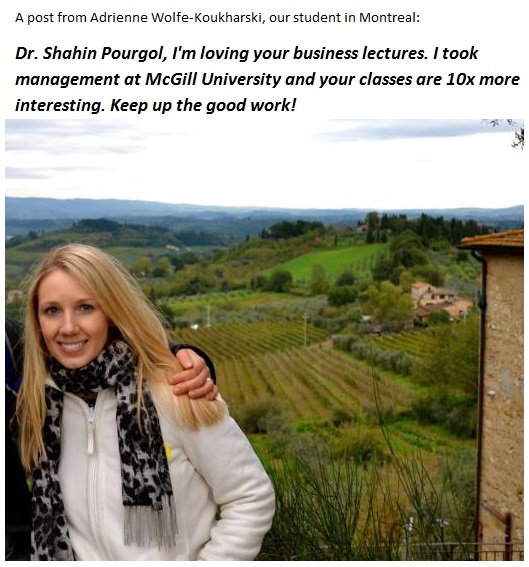
Better than McGill University!
 I sincerely appreciate all your advice and your work to give us the best means to improve our odds to succeed in this new path. Your speech at graduation ceremony was very inspiring. As you said, you will always be part of the change in our lives, an important part, let me complete, and I will always be grateful to you for all the knowledge that you have transferred to us but most of all, for your devotion as a teacher and your engagement to your students to make successful people of us. Words are not enough. Thank you. .
Irmina Toledo Gehrmann, DO (Spain)
Hi Dr Pourgol, Just wanted to let you know I am enjoying your online classes, I like the fact that you use the skeleton and then the actual human patient, it really drives the point home, I especially like the Ethics and Clinical Management lectures, I thought they would be boring, but your personal experiences make it very inspiring. Thanks.
Dr Randy Nagir, ND (San Fernando, Trinidad & Tobago), 3rd semester National University of Medical Sciences (Spain) student – Doctor of Osteopathy program
Dr Randy Nagir, ND