One of the aspects I appreciate most about healthcare in the United States is that regulatory oversight is primarily managed by the government rather than by professional groups, as is common in many other countries. This benefits the public, as those overseeing access to professions are not financially motivated by restricting entry. Instead, broader access supports workforce growth and contributes positively to the economy.
I am pleased to share that we are currently exploring a pathway whereby certain graduates of the National University of Medical Sciences (USA) PhD program, after completing specific postgraduate continuing education, may become eligible to apply for licensure in two states within an already regulated, state-licensed healthcare profession in a natural health (non-manual therapy) field.
Although we do not currently offer full programs in these natural health professions, we have been informed that our alumni may be able to complete a defined number of additional courses—potentially within one academic semester (approximately six months)—to qualify for entry into the respective regulatory boards. This would allow them to obtain state licensure, with the potential ability to receive insurance reimbursement for their (non-manual therapy) services.
This opportunity has emerged as a direct result of National University of Medical Sciences (USA) being granted recognition that allows qualified PhD graduates to use the title “Dr” in all 50 states, under specific conditions. These graduates may join a federal health authority pathway that enables them to operate under an exempted category, with a defined and protected scope of practice, without requiring traditional state licensure.
This progress reflects over a decade of consistent effort to establish and expand the profession of manual osteopathy in the United States. As acceptance grows within one system, it naturally opens doors to recognition in others. The impact is not limited to the U.S.—for example, NUMSS (USA) PhD (OCS) graduates are now accepted by most health insurers in Canada when they meet specific criteria.
We are very encouraged by this development. If finalized, we plan to introduce targeted continuing education programs in these related natural health fields to support our alumni in meeting regulatory requirements. Once licensed in one state, many professionals can benefit from reciprocity or streamlined licensing pathways in other states, significantly expanding their opportunities.
An additional advantage is that alumni may hold multiple professional designations, allowing them to integrate more than one healthcare system into their practice. This could broaden their scope of services beyond manual osteopathy alone.
The future for osteopathic manual practitioners in the United States is very promising. The US system supports innovation, professional mobility, and opportunity. While these discussions are still in a sensitive negotiation phase, and I must remain intentionally general at this time, I look forward to sharing more detailed updates as developments are finalized.
Have a wonderful day and God bless.
Dr. Shawn Pourgol, MBA, DC, DO, DN, PhD


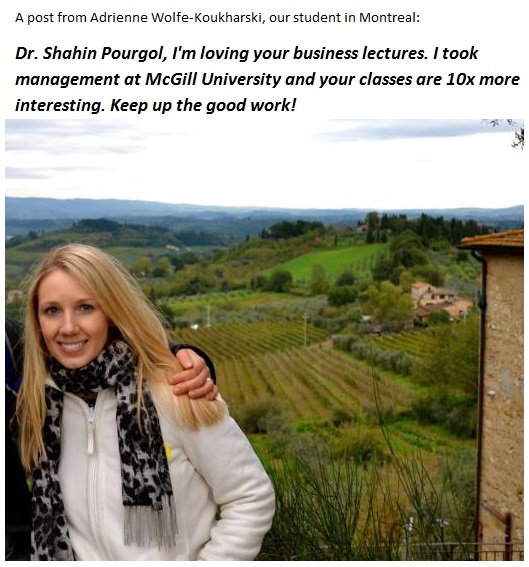
Better than McGill University!
 I sincerely appreciate all your advice and your work to give us the best means to improve our odds to succeed in this new path. Your speech at graduation ceremony was very inspiring. As you said, you will always be part of the change in our lives, an important part, let me complete, and I will always be grateful to you for all the knowledge that you have transferred to us but most of all, for your devotion as a teacher and your engagement to your students to make successful people of us. Words are not enough. Thank you. .
Irmina Toledo Gehrmann, DO (Spain)
Hi Dr Pourgol, Just wanted to let you know I am enjoying your online classes, I like the fact that you use the skeleton and then the actual human patient, it really drives the point home, I especially like the Ethics and Clinical Management lectures, I thought they would be boring, but your personal experiences make it very inspiring. Thanks.
Dr Randy Nagir, ND (San Fernando, Trinidad & Tobago), 3rd semester National University of Medical Sciences (Spain) student – Doctor of Osteopathy program
Dr Randy Nagir, ND